





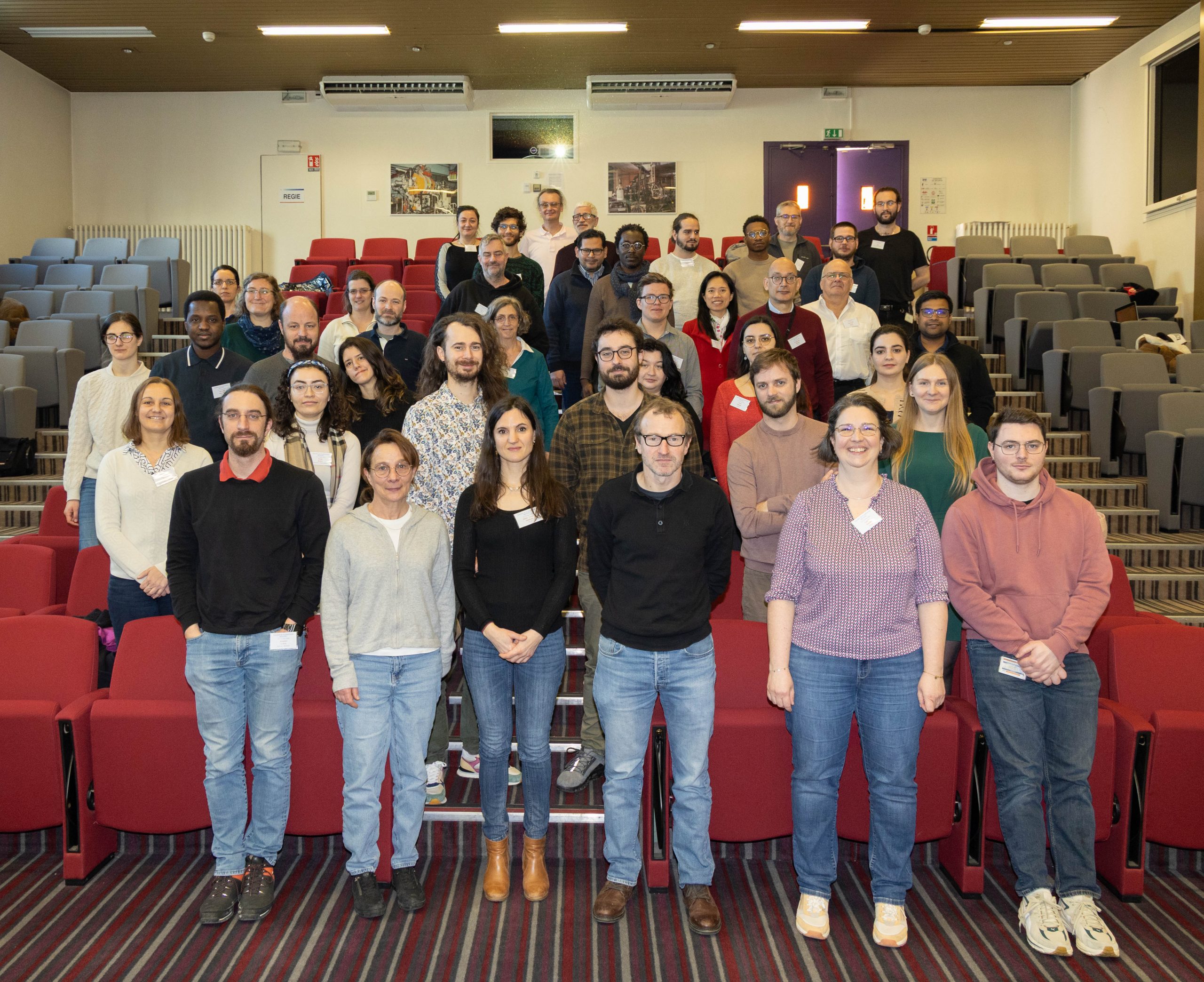
On 12 and 13 March 2026, the MOSAIC platform at IJCLab brought together 57 participants for its second user meeting. Through 16 presentations, the event showcased the full scientific scope of this ion beam infrastructure, from nuclear fuel to quantum devices and astrochemistry. Pictures by Dominique Longieras (IJCLab).
Since 2023, MOSAIC has united five accelerators and complementary instruments on the Orsay campus, covering energies from 50 eV to 32 MeV for over 70 chemical elements and molecular ion beams. Supported by CNRS Nucléaire et Particules and Université Paris-Saclay, and a member of the EMIR&A federation, the platform is open to both academics and industry.
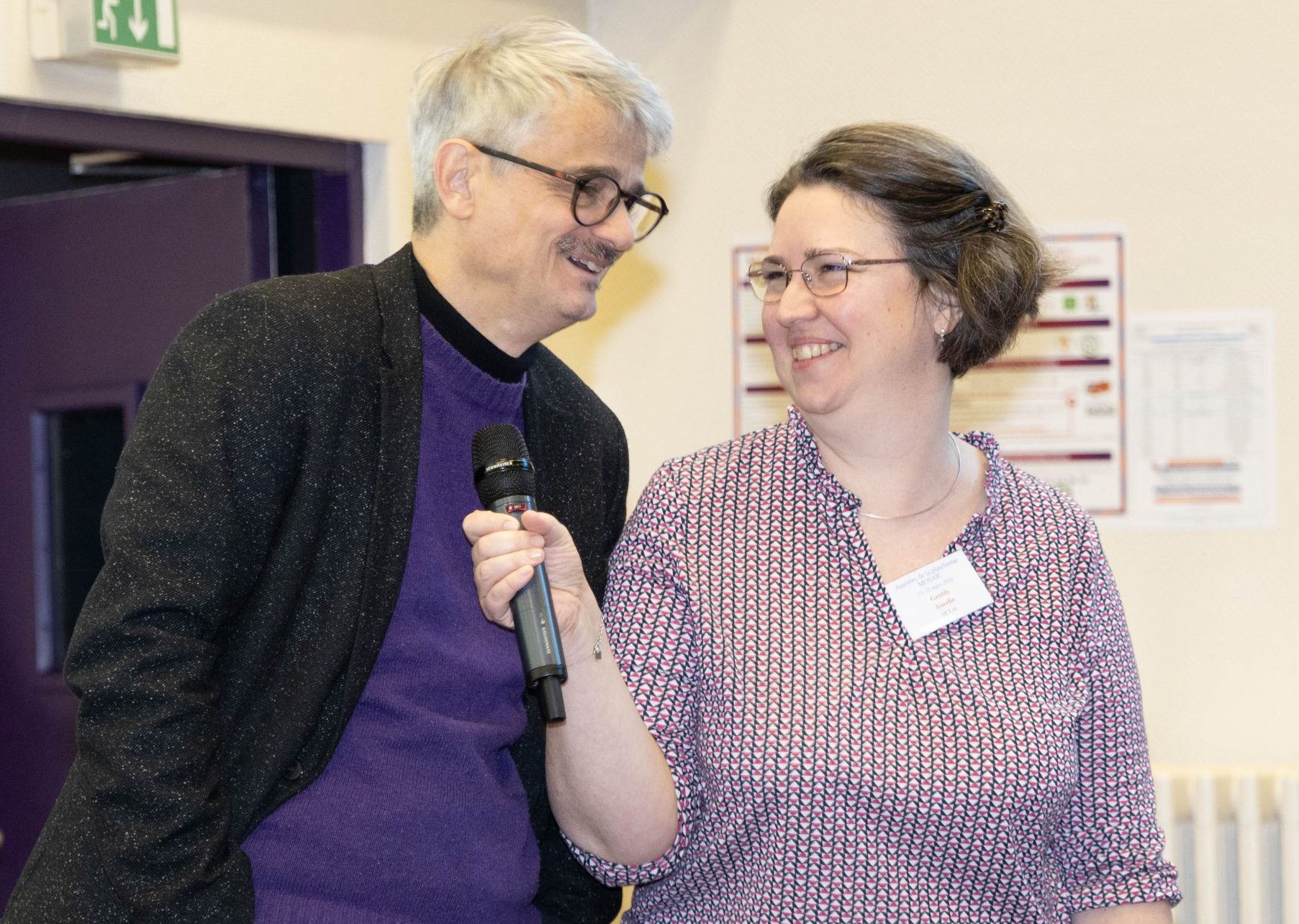
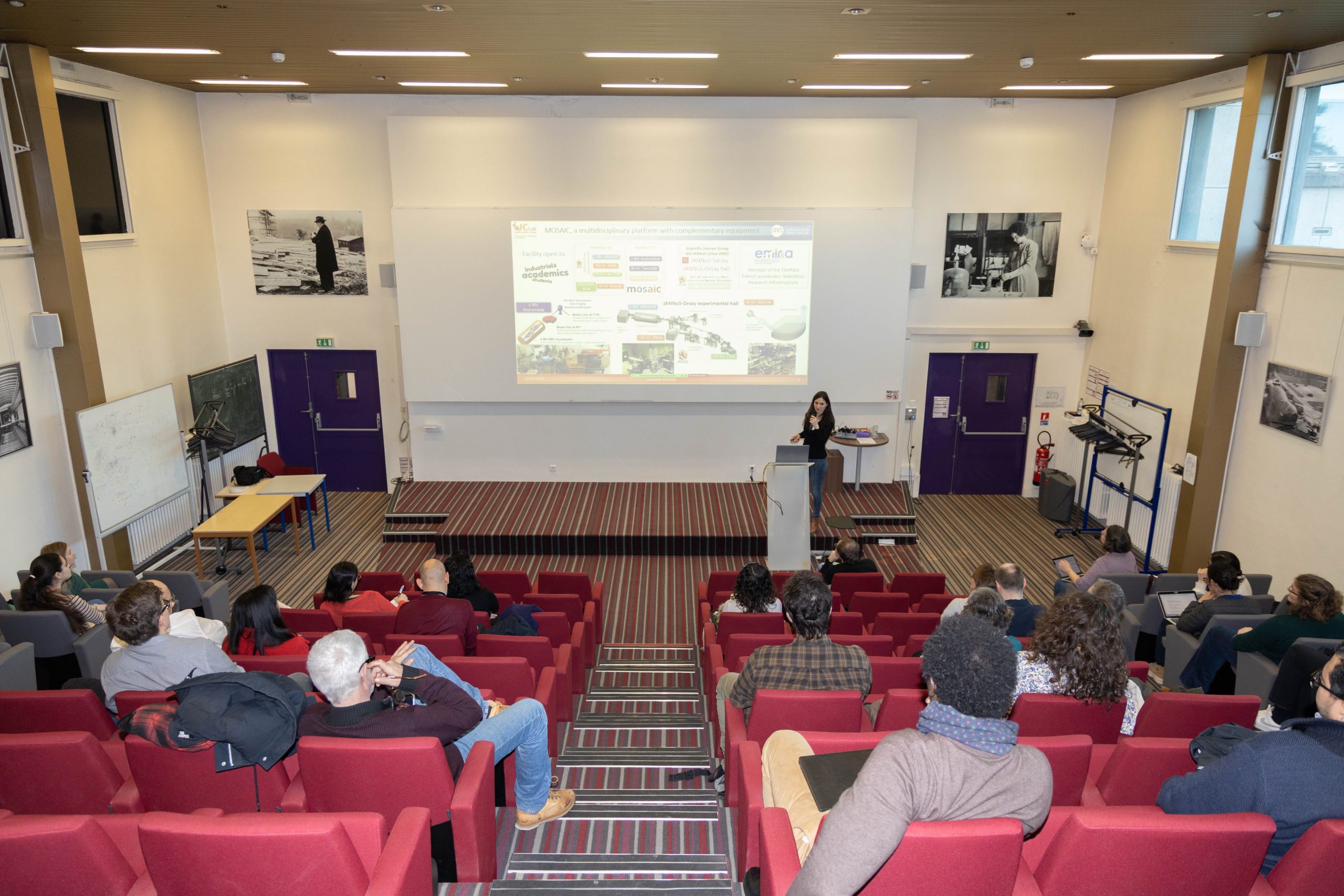
After the welcome address by Achille Stocchi, director of IJCLab (pictured with Aurélie Gentils, head of the Energy and Environment department), Stéphanie Jublot-Leclerc (below), the new scientific manager of MOSAIC, reviewed the progress of a rapidly growing platform. It contributes to around fifteen publications each year and supports approximately five doctoral theses. Nine early-career researchers, doctoral students and postdocs, were among the speakers. Gender balance was well represented, with a majority of women chairing the sessions and many female speakers.
Three examples among the contributions illustrate the richness of the programme. Ewelina Kucal (IJCLab) is investigating during her postdoc the position of chromium in doped uranium dioxide, a so-called "accident-tolerant" fuel that enhances reactor safety margins. She probes UO₂ single crystals, pre-implanted with chromium on IRMA, using the channelling PIXE technique with ARAMIS, and analyses the spectra with a dedicated code (PIXEK) she developed at the laboratory. This work, published in 2026, is carried out in collaboration with NCBJ in Poland.
Aiken Van Waveren (C2N, Palaiseau) showed in his doctoral research how ion implantation on IRMA, combined with nanosecond laser annealing, can make silicon superconducting. The team produced the first planar Josephson junctions in this material, a CMOS-compatible process that paves the way for new quantum devices. This work involves C2N, IJCLab, LPS and MFA in Hungary.
Rosario Brunetto (IAS, Orsay) used the Sidonie isotope separator coupled with the INGMAR in situ infrared measurement system to reproduce space weathering of planetary surfaces, from Mercury to the outer reaches of the solar system.
In total, researchers from IJCLab (Energy and Environment, Nuclear Physics, and Accelerator Physics divisions) and over ten French laboratories (IAS, I2BC, LPS, C2N, Pprime, GANIL, CIMAP, XLIM, CEA Saclay and CEA Marcoule), as well as three foreign institutions (University of Birmingham, University of the Witwatersrand in South Africa and RBI in Croatia) shared their results. The breaks provided fruitful exchanges between users and the platform's technical team.
Ongoing developments were also presented. The SIXPAC project will couple an X-ray diffractometer to a new beamline on the ARAMIS accelerator to observe material transformations under irradiation in real time, with the first in situ tests planned for late 2026.
The Tancrède accelerator, recently recommissioned and modernised, now hosts two experiments, ISD and HINA, which were presented during the meeting.
A sixth accelerator, Némée, from IP2I (Lyon), will also be brought back into operation shortly and will complement the platform's ion beam capabilities.
Finally, a TEM sample holder for irradiation in liquid environments, on loan from ELOISE SAS, opens up prospects for nanoscale studies in ion therapy and irradiation-induced corrosion.
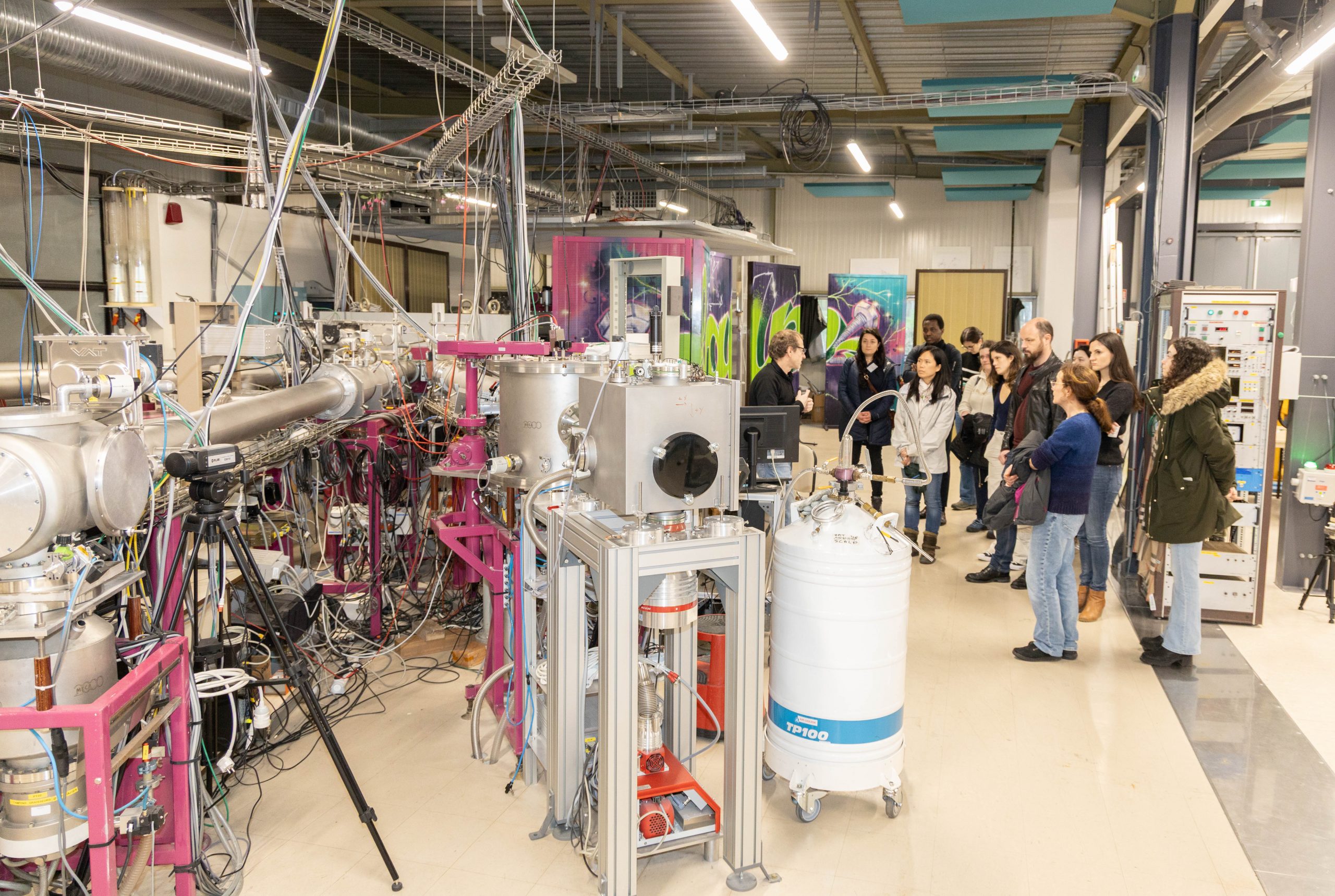
A tour of the facilities concluded two convivial and interdisciplinary days, supported by France 2030 through the Graduate School of Physics (P2I axis) and the Integrative Materials Institute of Université Paris-Saclay.